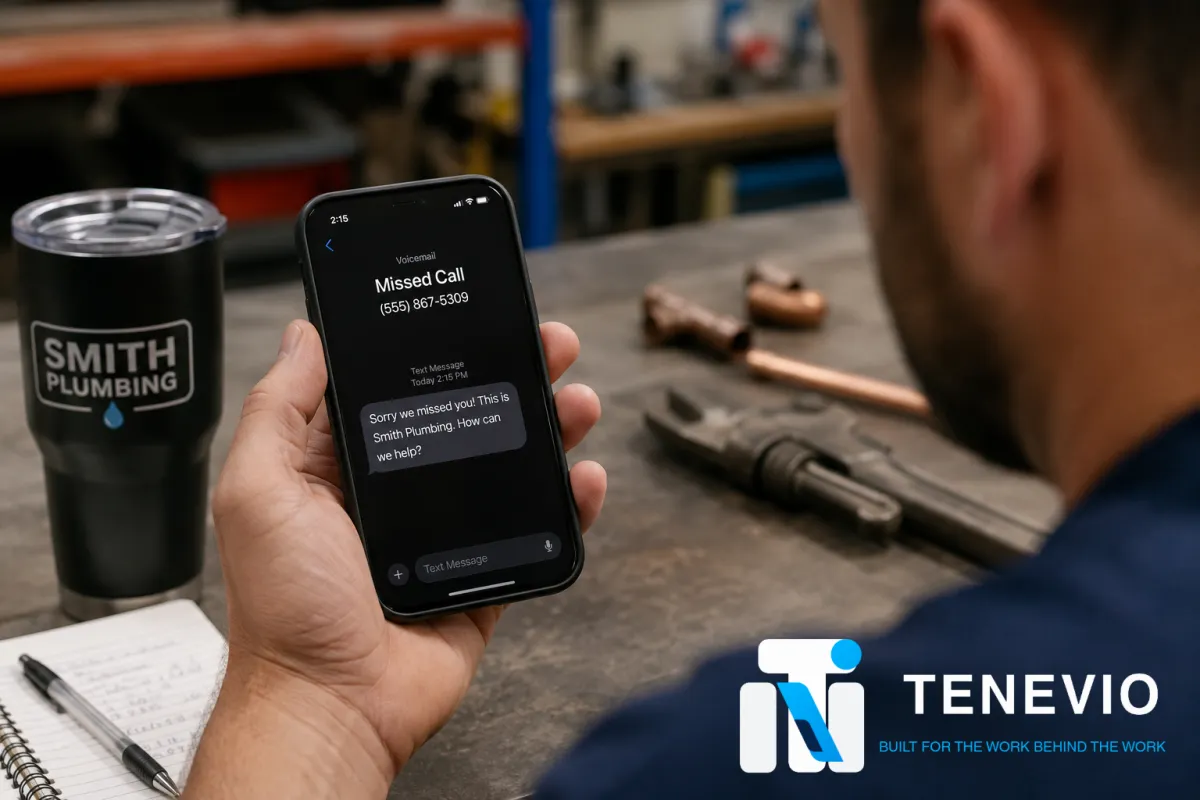
The Quiet Cost of a Missed Call
CUSTOMER COMMUNICATION
Most small businesses track the leads they win. Very few track the ones that never rang twice. A missed call rarely feels like a loss in the moment. You were with a customer, on a job, or simply away from your phone. But on the other end, someone with money to spend just hit voicemail, and voicemail is where good intentions go to die.
Studies of consumer behavior consistently show the same thing: when people can't reach one business, they don't wait around. They call the next name on the list. The caller who couldn't reach you at 2:14 has often booked with a competitor by 2:20. You never see it happen, which is exactly what makes it so easy to ignore.
Why missed calls hurt more than they look
A missed call is not a neutral event. It carries three hidden costs that add up quietly over a month:
•The lost sale itself: the job, appointment, or order that walked to someone else.
•The lifetime value behind it: a first-time caller who would have become a repeat customer and a source of referrals.
•The marketing you already paid for. That call may have come from an ad, a listing, or a referral you invested in. Missing it means you paid to generate a lead and then dropped it.
A simple fix: answer even when you can't answer
You will never catch every call live, and you shouldn't have to. The goal isn't to be glued to your phone. It's to make sure no caller ever hits a dead end. The most effective habit is a fast, automatic text back the moment a call goes unanswered.
A short message like "Sorry we missed you! This is [Business]. How can we help?" does something powerful: it turns a missed call into an open conversation. Instead of the customer moving on, they reply on a channel they're comfortable with, and you respond when you get a free minute, without the pressure of a live ring.
If you want to set this up, a few principles matter more than the tool you use:
1.Reply within a minute or two, not an hour. Speed is the entire point.
2.Sound like a person, not a robot. Use your business name and a warm, plain tone.
3.Ask one clear question so the customer knows what to do next.
The takeaway: Every unanswered call is a customer standing at your door. A quick automatic text back keeps that door open instead of letting them walk to the next business.
This is one of the simplest systems to put in place, and it's exactly the kind of quiet, behind-the-scenes work Tenevio helps small businesses automate, so a busy afternoon never turns into a lost customer.